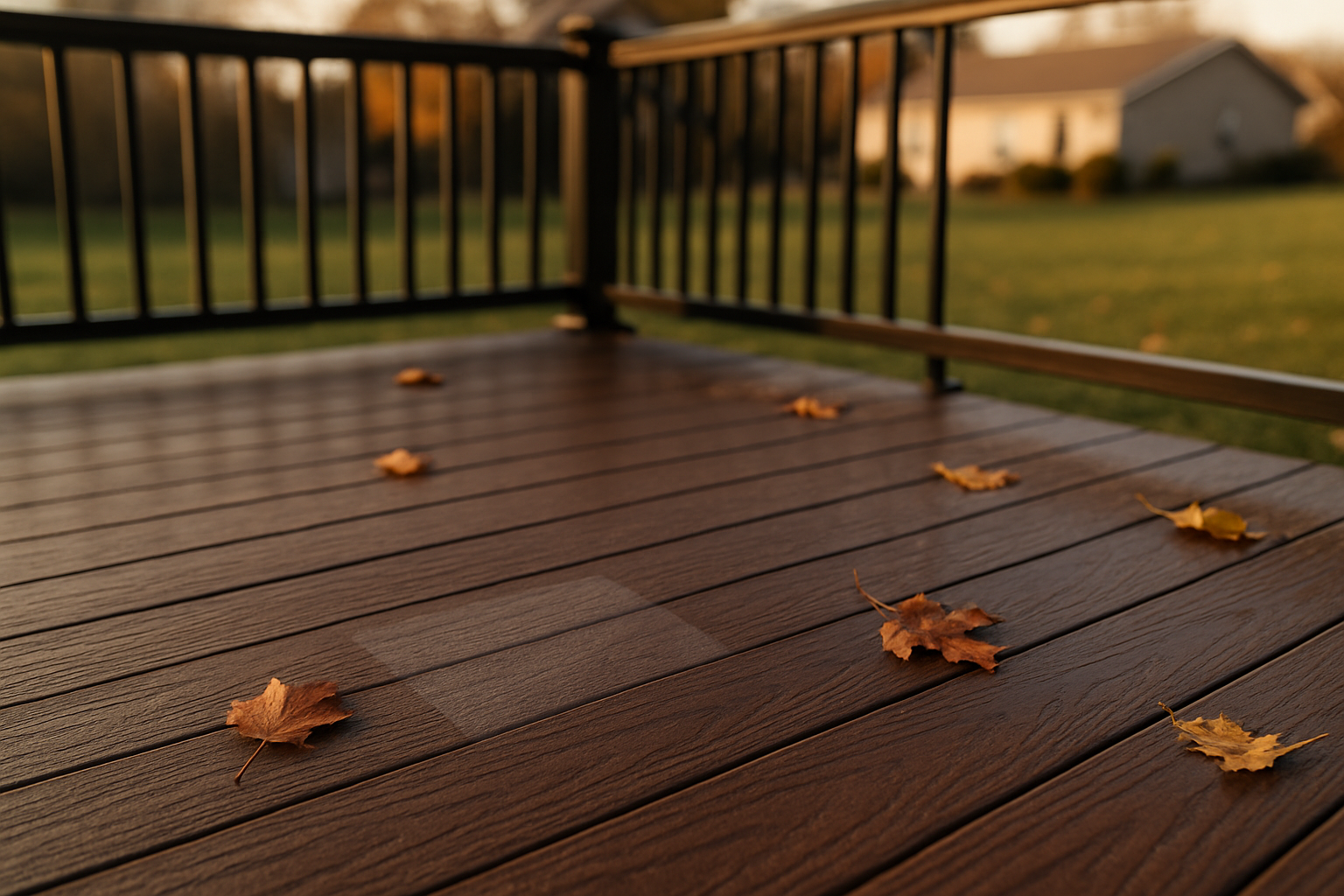
Two summers ago, a homeowner in Fishers called us after her composite deck started showing faint gray rectangles wherever her heavy ceramic planters sat. The boards weren't rotted—composite doesn't rot like wood—but the trapped moisture and lack of airflow had stained the surface, and a soft spot underneath told us the framing was starting to suffer. She loved her deck planter boxes, but the setup was all wrong. That call turned into a full planter redesign. It got me thinking: most people who want planters on a deck don't realize how much damage they can do without the right approach.
If you're in Indianapolis, Carmel, Fishers, or any of the surrounding areas, you know our freeze-thaw cycles, summer humidity, and occasional downpours can turn a pretty planter into a problem. Here's what you need to know to keep your deck beautiful and the boards underneath dry.
Why Deck Planter Boxes Work on Composite (And What Can Go Wrong)
Composite decking is great because it resists rot, insects, and fading. But it's not invincible. Put a planter directly on the boards, and you block airflow. Moisture gets trapped, and over time, that can stain the surface or even discolor it. Worse, the deck framing is still wood—and wood framing rots when it stays wet. A deck contractor will tell you that the number one enemy of any deck is water sitting where it shouldn't. So if you want deck planter boxes, you need to think about drainage from day one.
That doesn't mean you can't have beautiful planters. It means you have to be smart about it. The good news is that with the right setup, your composite deck can handle planters for years without any problems.
Built-In vs Freestanding: Which Is Right for Your Deck?
Built-in planters look seamless and custom, like they grew out of the deck itself. But they're also more work: you need a liner (EPDM is best), weep holes, a slight slope inside so water runs out, and careful waterproofing where the planter meets the deck boards. If you skip those, you'll get rot in the framing and maybe even inside your home if the planter sits against the house.
Freestanding planters are simpler and cheaper. You can move them around, change your layout, and even take them inside for winter. The downside is they might not match your deck as perfectly, and some people think they look bolted on. I once helped a Zionsville homeowner who built a big cedar planter box directly on his deck without a liner. After one winter, the corner board swelled and popped the fasteners. He ended up ripping it out and starting over with an aluminum freestanding planter that had a built-in drainage tray. Lesson learned.
If you have a screened porch or patio enclosure, planters just outside the door can extend the greenery season. But a patio enclosure supplier will tell you to keep air moving around the planter. Stagnant moisture near the enclosure frame can cause mold or corrosion, so choose lighter, frost-proof materials and leave a gap between the planter and the enclosure wall.
Planter Materials That Survive Indianapolis Freeze-Thaw Cycles
Indianapolis is Zone 6a. That means cold winters, warm summers, and a lot of freezing and thawing in between. Ceramic and terracotta planters will crack if left outside with wet soil. You have to move them indoors by early November or risk losing them.
Better choices: powder-coated aluminum, fiberglass, and HDPE (that's the same plastic used for milk jugs, but thick and durable). These handle freeze-thaw without flinching. Cedar is beautiful and naturally rot-resistant, but it still needs a liner inside to keep water off the wood. On a west-facing deck in Fishers, composite can get hot enough to burn bare feet—we wrote about that here. Lighter colored planters and heat-tolerant plants help, but the material matters too. Aluminum reflects heat, while dark plastic can get almost too hot to touch.
Protect the Deck Surface: Riser Feet, Trays, and What Not to Use
The easiest way to ruin a composite deck is to set a planter flat on the boards and leave it there. Water gets trapped, and the boards underneath can't dry out. Use riser feet or a ventilated tray to lift the planter a half inch or so. That lets air flow underneath and keeps the surface from staying damp. You also want to move planters every few weeks—maybe once a month—so the boards get even sun exposure and color out evenly.
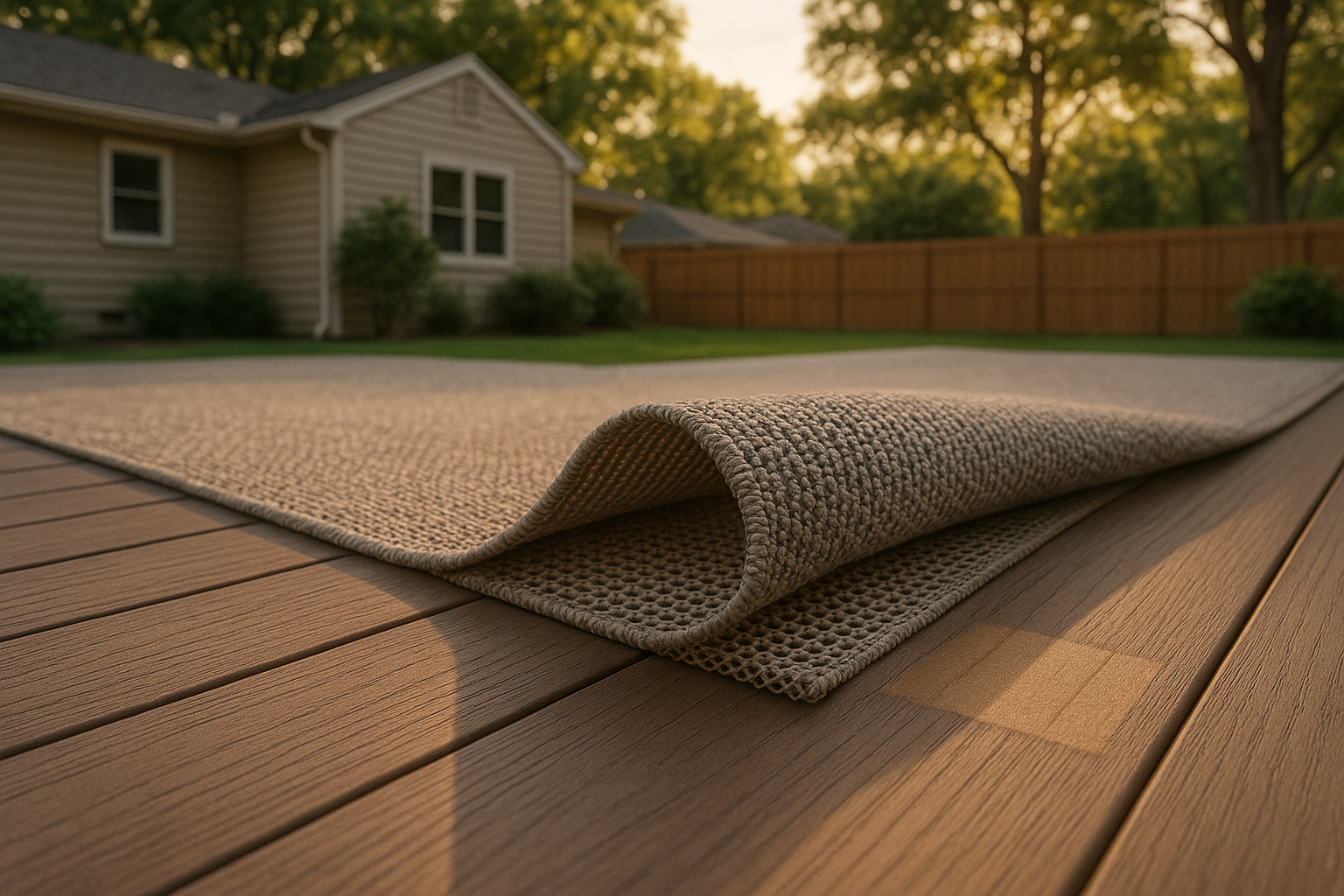
Avoid PVC-backed rubber mats. They seem like a good idea to catch drips, but they hold moisture against the deck instead of letting it evaporate. If you have a pet-friendly deck surface, you already know scratches show. Dragging a heavy planter without feet can leave marks. That's another reason to use riser feet and maybe a plant dolly for big pots.
Drainage Is the Real Deck Saver
Your deck boards have gaps between them for a reason. That's where water is supposed to go. If you put a saucer under your planter to catch overflow, make sure it has a spout or diverter that sends water into one of those gaps—not onto the board next to it. And don't block the gaps with mulch or soil that washes out. Built-in planters need weep holes in the bottom and a slight slope inside (about 1/8 inch per foot) so water doesn't pool.
A heavy downpour in Avon can dump an inch of rain in an hour. That water has to go somewhere. If it can't drain, it'll find the weakest point—usually the seam between your deck and the house, or the top of a joist. That's where rot starts.
Railing Planters: Safety and Code in Indiana
Railing planters are tempting because they add color without taking up floor space. But Indiana residential guard height is typically 36 inches, and you can't reduce that. If you hang a planter over the rail, it might create a climbable surface for kids. HOAs also have rules about what can hang over the edge. Before you buy anything, check with your local code and HOA.
A railing contractor who knows Indiana code will tell you that mounting planters on the rail can reduce the effective guard height if not done right. They can install heavy-duty anti-lift brackets that keep the planter secure in wind without weakening the railing. We have a full guide on deck guardrail height in Indiana here.
Can Your Deck Handle the Weight?
Saturated soil is heavy. A large planter can weigh hundreds of pounds. Your deck is built to hold people, but adding several big planters in one spot can overload a beam or cause a cantilever to sag. The key is to distribute weight over joists and beams, not in the middle of a span. Long planters should run perpendicular to the joists. For anything bigger than a couple of small pots, get a pro load check. A deck contractor can look at your framing and tell you exactly where you can put heavy planters and where you should keep it light.
Design Ideas: Privacy, Benches, and Planters That Work Hard
Planters used as a privacy screen along the edge of the deck are popular, but they act like a fence. A fence contractor knows about wind load and spacing. You can apply the same logic to make sure your planter screen doesn't tip over in a thunderstorm. Use wide, stable bases and anchor them if you can.
Built-in benches with planter ends are great for saving space. Corner planters help guide foot traffic and soften sharp angles. You can also run low-voltage lighting at the base of planters for evening ambiance. Just keep the wiring off the deck surface where water can pool.
Seasonal Care for Indy Decks
Spring: clean the deck and check for stains under planters. Summer: rotate planters every few weeks for even sun exposure. Fall: cut back dead plants and winterize any drip irrigation by blowing out the lines. Store fragile pots inside by early November. After a big storm, check that railing brackets are still tight and planter bases haven't shifted.
If you'd like a planter setup that won't void your composite warranty or rot the framing, give us a call. We'll come out, look at your deck, check the load, and design something that works for your space. You can schedule a consult right here.
Thinking about your own deck or pergola?
Free in-home design consultation, 3D rendering, and a written quote — no pressure.