Last spring, a guy named Dave in Carmel borrowed his buddy's pressure washer. He pointed the 0-degree tip at his cedar deck, thinking he'd blast off a winter's worth of grime in ten minutes. What he got was a deck that looked like a cat scratched it—fuzzy, splintery, with deep grooves. Then he tried to fix the mildew with a jug of chlorine bleach from the garage. The bleach killed the mildew, sure, but it also turned the wood a patchy, dry gray. Dave ended up calling us to sand and restore the whole thing. Lesson? Cleaning a deck isn't hard, but using the wrong products can turn a weekend chore into a full-blown renovation. If you want to know how to clean a deck without making Dave's mistakes, keep reading.
The Worst Deck Cleaning Products (And Why They Hurt)
First, let's talk about what not to grab from the shelf. Some of these are cheap and tempting, but they'll do more harm than good.
Chlorine bleach. That's the biggest offender. On wood, chlorine bleach breaks down the lignin that holds wood fibers together. Cedar and redwood get especially dry and gray. It can also kill your grass and shrubs if runoff splashes onto them. On composite decks, bleach can discolor the surface and void your warranty. So forget the "bleach kills everything" shortcut.
Pressure washers on the wrong setting. A pressure washer can be okay on wood if you keep the PSI low—more on that later. But anything over 1,500 PSI, or a 0-degree tip, will tear up the wood grain. It's like taking a cheese grater to your deck. On composites, pressure washing can scratch the surface and strip the protective sheen. That's a permanent mistake.
TSP and harsh acids. Trisodium phosphate (TSP) is too harsh for deck wood. It can etch the surface and leave a chalky residue. Same with muriatic acid—never use that on a deck. If you need to remove rust or tannin stains, there's a specific acid for that, but it's not the stuff in the pool cleaning aisle.
Petroleum solvents on composites. Things like mineral spirits, acetone, or paint thinner can melt or mar the capping on composite boards. They'll ruin the finish fast.
Abrasive scrub pads. Steel wool or stiff-bristle brushes will scratch both wood and composite. Stick to soft or medium-bristle nylon brushes.
Homemade mixes with vinegar or ammonia. Vinegar is acidic and can dull composite finishes and dry out wood. And if you ever hear someone say to mix bleach and ammonia—don't. That creates toxic gas. Just don't.
So, what should you use? That depends on what your deck is made of.
Safe Cleaners for Every Deck Type
Learning how to clean a deck starts with identifying what you're working with. Wood and composite need different products.
Wood Decks (Pressure-Treated Pine, Cedar, Redwood)
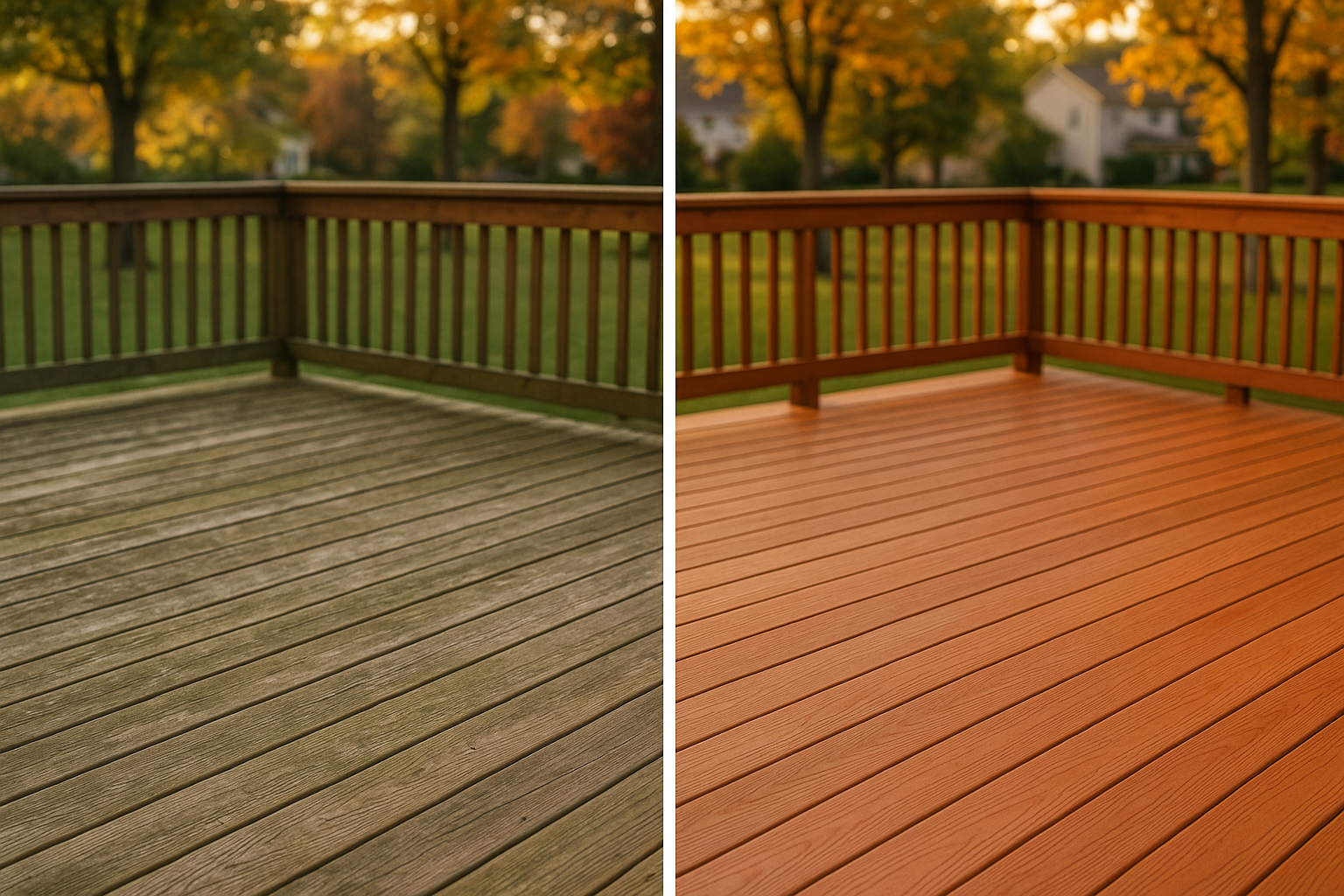
For everyday grime, use an oxygenated cleaner—the main ingredient is usually sodium percarbonate. You've probably seen it in products like OxiClean. It's also in pretty much every good wood deck cleaner. Mix it with warm water, apply it with a pump sprayer, let it sit for 10–15 minutes, then scrub lightly with a soft brush and rinse. Oxygen bleach is pet-safe when diluted, plant-safe, and it won't bleach the wood's natural color. That's the big difference between oxygen bleach and chlorine bleach. Chlorine bleach will strip color and damage fibers; oxygen bleach just lifts dirt and mildew.
Cedar and redwood are softer than pressure-treated pine, so be extra gentle. Don't let the cleaner dry on the surface—work in small sections.
For rust stains from metal furniture or leaf tannin stains from wet leaves, use an oxalic acid-based wood brightener after cleaning. Mix it per directions, apply to the stained area, let it sit for a few minutes, then rinse fast. It pulls the stain out without harming the wood.
Composite Decks (Trex, TimberTech, etc.)
Composite decks don't need sealing, but they still collect dirt, pollen, and mildew. The safest way to clean a composite deck is with a pH-neutral composite deck cleaner. You can also use plain warm water and a few drops of mild dish soap—like Dawn. Apply with a soft-bristle brush or a mop, scrub lightly, and rinse thoroughly. Never use bleach, solvents, or abrasive pads. And skip the pressure washer entirely. Check your manufacturer's care guide before you do anything—using the wrong product can void the warranty. We talk more about that in our article on composite deck warranties.
A dirty composite deck might just need a good rinse after a pollen storm. But if you've got black spots or sticky film, give it a gentle wash as described. After cleaning, let it air dry. That's it. No sealing, no staining.
Step-by-Step: How to Clean a Deck the Right Way
Whether you have wood or composite, the process is similar. Here's the method we recommend to folks around Indianapolis.
- Clear the deck. Move furniture, grills, planters, and rugs off the surface. You want full access to every board.
- Protect your landscaping. Wet down nearby plants and cover delicate ones with plastic sheeting or old sheets. Runoff from deck cleaners can irritate leaves, even the "safe" ones.
- Check the weather. Aim for a day between 50°F and 85°F, low wind, and at least 24–48 hours of dry weather afterward. Avoid cleaning in full sun—the cleaner will flash-dry and leave streaks. Morning or cloudy afternoons are best.
- Put on safety gear. Gloves, eye protection, and non-slip shoes. Read the label on whatever cleaner you use. Don't mix products.
- Apply cleaner top-down. Start with railings and posts, then do the deck boards, then stairs. Work in sections about 4×4 feet or 6×6 feet so the cleaner doesn't dry before you scrub.
- Agitate lightly. Use a soft-bristle brush or a deck brush with medium bristles. Scrub along the grain, not against it. You're lifting dirt, not sanding.
- Rinse thoroughly. A garden hose with a fan nozzle works fine. Make sure you get all the residue off—leftover cleaner can leave a white film or sticky spots. Pay extra attention to gaps between boards so water and debris don't pool.
- Let it dry. For wood, wait 24–48 hours before staining or sealing. In humid Indy summers, give it the full 48. For composite, just air dry and put your furniture back.
A note on pressure washers. If you must use one on a wood deck, keep it under 1,500 PSI with a 25–40 degree tip. Hold the wand at least 12–18 inches from the surface and move with the grain. Never use a pressure washer on a composite deck—it will scratch the capstock and dull the finish. Most deck washing mistakes come from pressure washers, so if you're not sure, skip it.
Why Indy Decks Get So Dirty (And How Often to Clean)
In central Indiana, our decks take a beating year-round. Summers are humid, which feeds mildew and algae. Decks on the shaded north or east side of a house stay damp longer, so they end up with black spots and slippery boards. If you've got a pergola or shade sail, that area might be even worse. We wrote about shade options if you need relief from the sun, but remember, more shade can mean more mildew—so clean those spots regularly.
Spring brings heavy pollen from oaks and maples, plus cottonwood fluff. That stuff gets sticky when wet and can leave yellow or brown stains if you don't rinse it off quickly. A quick spray-down after a pollen burst helps a lot.
Fall leaf litter in mature neighborhoods—like parts of Zionsville, Greenwood, or older Fishers—causes tannin stains. Those dark leaf outlines show up on wood and composite. For wood, a dilute oxalic acid spot treatment works; for composite, a mild cleaner and some elbow grease usually does it.
Winter salt from boots and de-icer gets tracked onto decks all over Carmel, Westfield, Noblesville, and Avon. That salt can discolor boards and corrode the hardware on railings and fasteners. Come spring, give your deck a good rinse to get rid of it.
And don't forget HOA rules. In a lot of these suburbs, a clean, even-looking deck is expected. If you're planning to sell or just want to keep the neighbors happy, a spring cleaning makes a difference.
For most wood decks, one deep clean in the spring is enough. You might do a quick rinse and light brush in mid-summer if mildew is popping up. After fall leaf drop, check for stains and give it another rinse before winter. Composite decks can go a bit longer, but a spring wash is still smart.
When to Call DeckPros Instead
Sometimes DIY just isn't worth it. If your wood deck has turned gray, feels fuzzy, or the boards are cupping, a simple cleaning won't fix it—you likely need stripping, brightening, and maybe sanding. That's a bigger job. If you've got black algae that won't scrub off, or glossy areas that stay slick even after cleaning, that's a sign of buildup or failing finish. We see these issues all over Indianapolis, especially on older decks.
If you have a composite deck and you're worried about voiding the warranty, we can do a warranty-safe cleaning and inspection. We know the care requirements for Trex, TimberTech, and other brands, and we'll follow them to the letter.
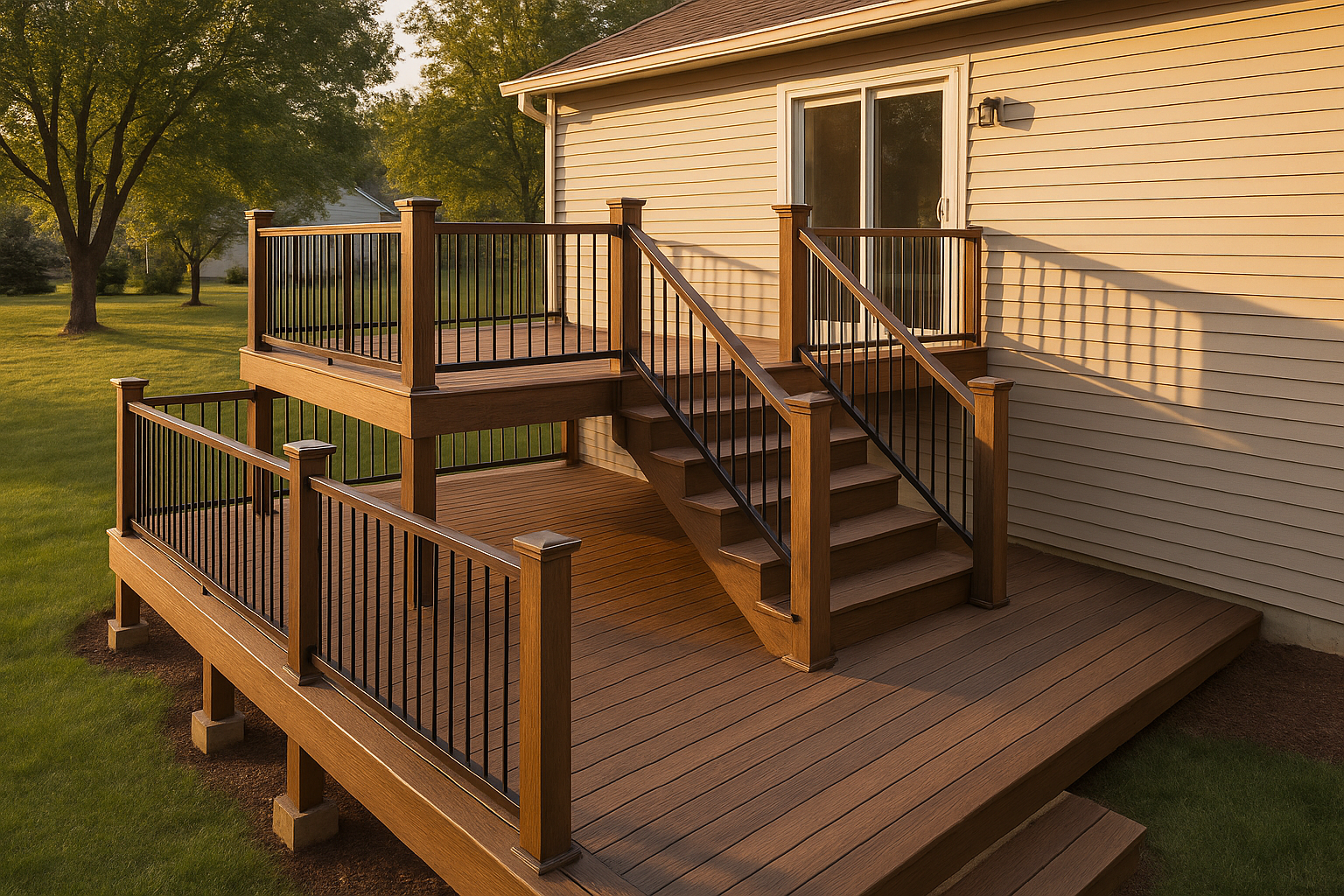
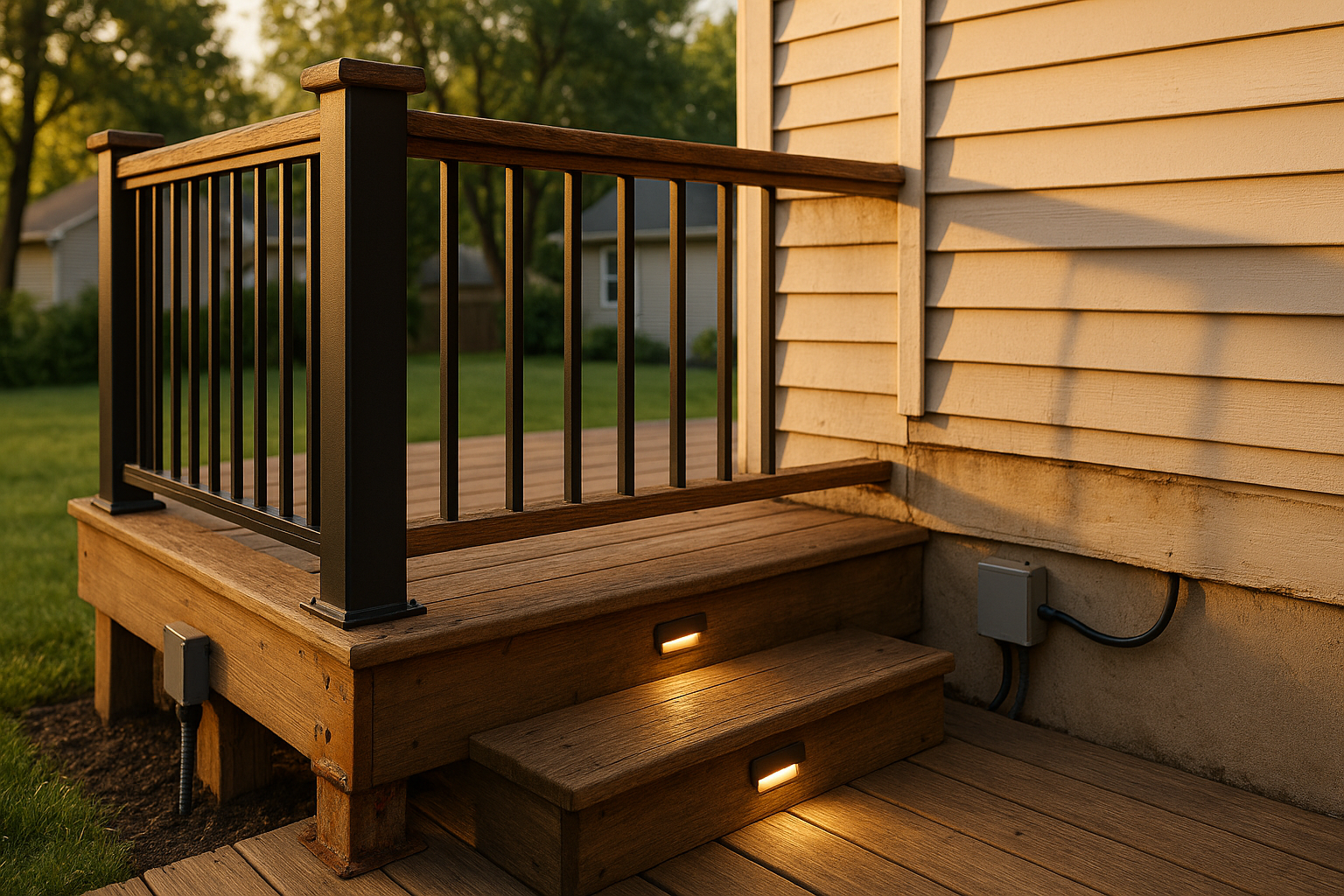
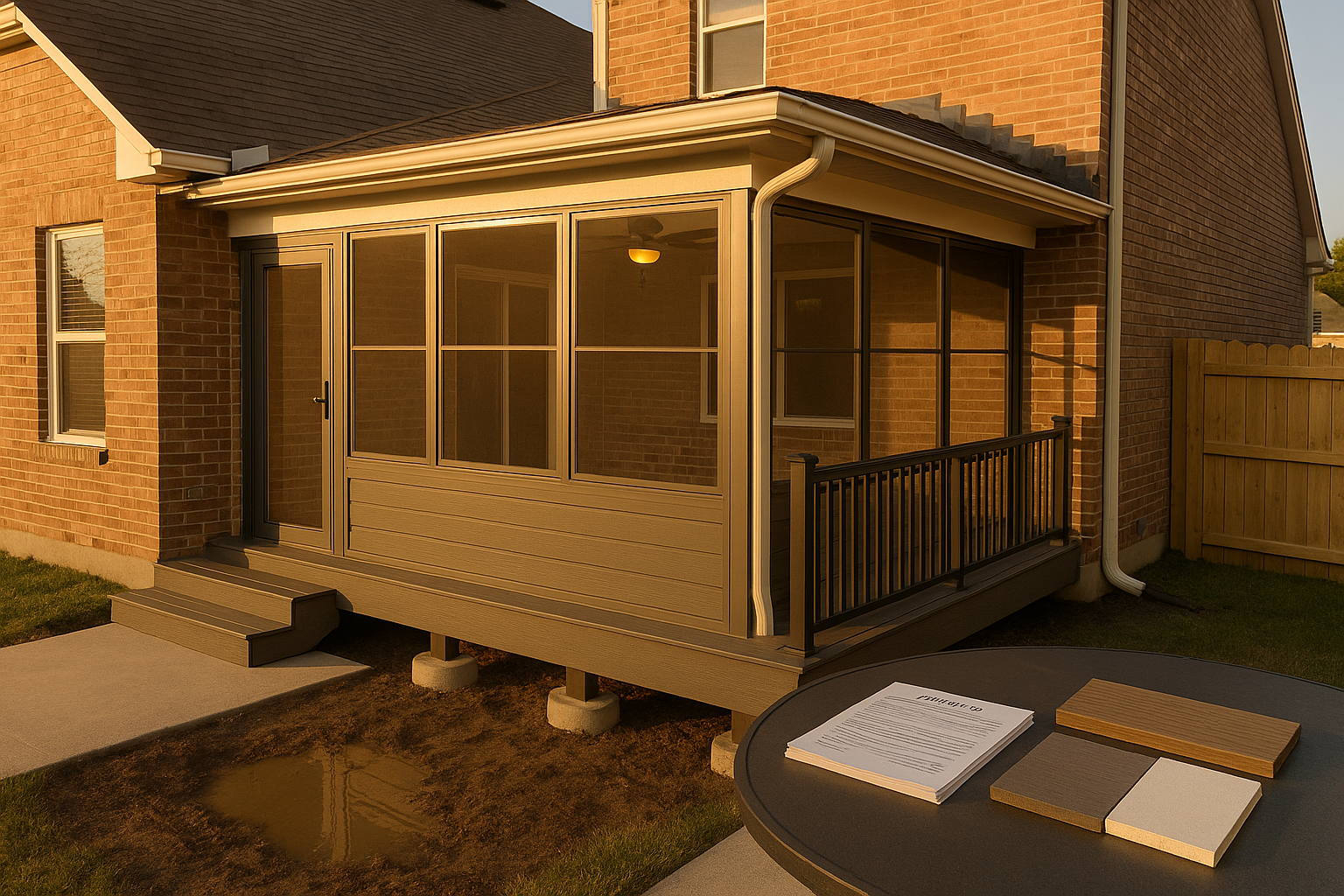
And it's not just the deck boards. We also handle full deck repairs and builds. If your railing is wobbly, rusted, or loose after years of salt exposure, we can repair or replace it while we're there. Railing repairs are often overlooked, but they're a safety issue. If you have a patio enclosure or sunroom attached to the deck, we'll make sure our cleaning runoff doesn't damage the enclosure seals or siding. And if there's a fence right next to the deck, we'll check the connection point for rot or damage—because water from deck cleaning can pool at the base of a fence and cause problems. That's part of being a full-service outdoor contractor.
So, if you'd rather not risk a Dave-style disaster, or you just don't have the time to do a proper job, get in touch. We'll come out, assess your deck, and give you a clear maintenance plan that fits your material and our Indiana climate. You can request a quote or schedule a site visit here. We serve Indianapolis, Carmel, Fishers, Zionsville, Westfield, Noblesville, Greenwood, Brownsburg, Avon, and Plainfield.
Thinking about your own deck or pergola?
Free in-home design consultation, 3D rendering, and a written quote — no pressure.