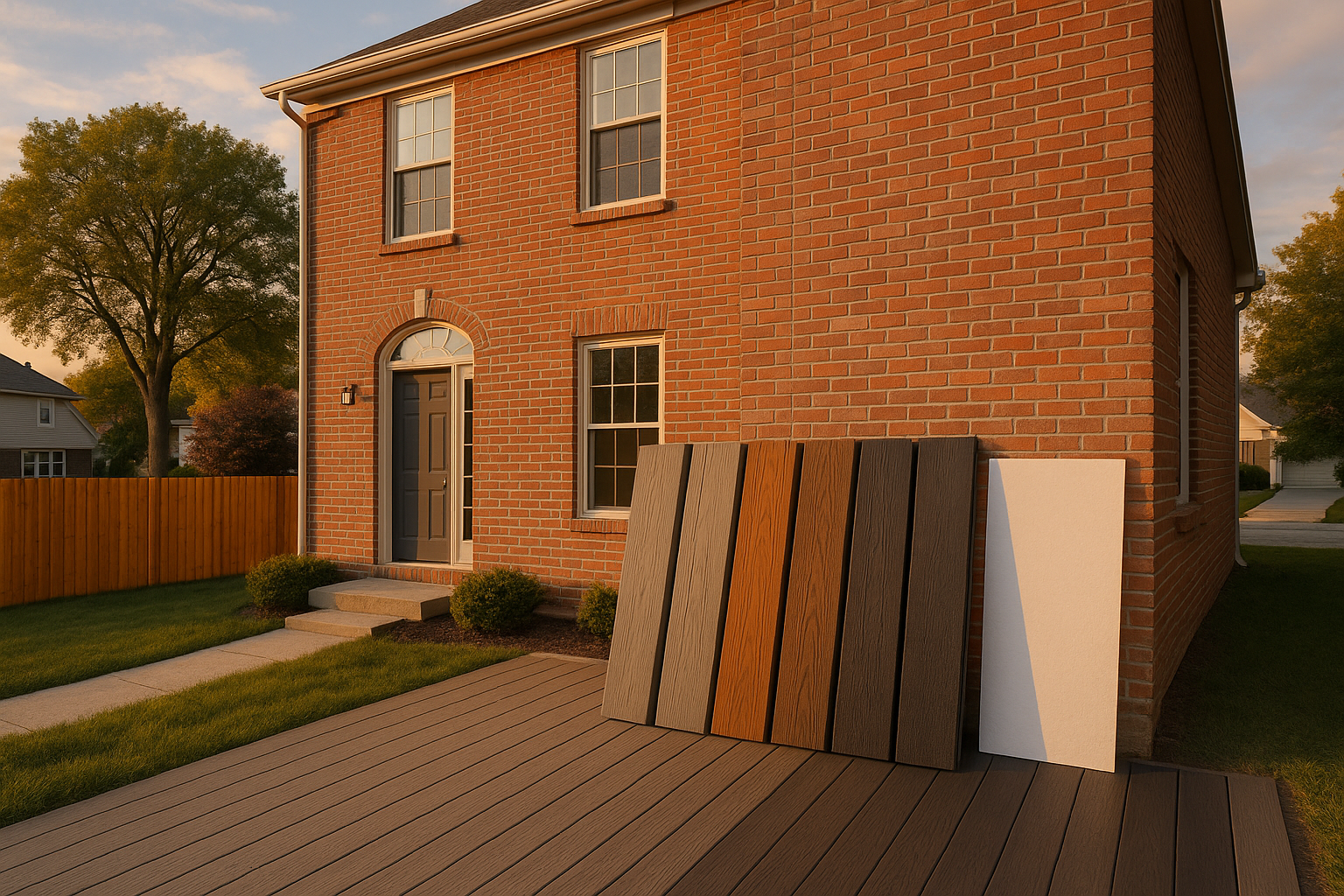
Last April I got a call from a homeowner in Fishers. She had a classic red brick colonial and had ordered a bunch of composite samples online. She was convinced gray would be the safe choice. But when she set a cool gray board next to her brick, it looked almost purple in the late afternoon sun. She panicked. "I thought gray goes with everything." Not with red brick, not all grays anyway. We came out with full-size boards, tested a few greige and warm brown options against her brick and mortar. The winner? A medium driftwood with a hint of tan. It melted right into the brick's warm undertone. That's the thing about deck colors for a brick house — the brick is already doing a lot of work, so the deck needs to respect it, not fight it.
If you're staring at a brick exterior in Indianapolis, Carmel, Fishers, or anywhere in the metro, and feeling stuck on deck color, here's how to think about it without losing your mind.
Read Your Brick Before You Pick a Board
Brick isn't one color. It's a bunch of colors baked together. In Indy, we see a lot of red brick from the 1950s to 1980s — that orange-red tone you see in Broad Ripple or Meridian-Kessler. Then there's the tumbled red brick in newer subdivisions in Westfield and Noblesville, with darker burnt edges. Tan and brown brick show up in Greenwood and Avon. And painted white brick is all over Zionsville and Carmel, especially on ranch homes.
To match deck colors to a brick house, you need to figure out the undertone. Hold a plain white sheet of paper next to the brick. If the brick looks pink, orange, or brown next to white, it leans warm. If it looks blue-red or purple, it leans cool. Most Indianapolis brick is warm, because it's made from local clay with iron oxide. That's why cool gray composites can look off next to red brick — the gray has blue undertones that clash with the brick's orange.
But gray can work. You just need a warm gray or greige (gray plus beige). More on that below.
Color Frameworks That Make Sense for Brick Homes
There's no single best deck color for a red brick house, but there are three simple approaches.
Warm Browns for Maximum Harmony
If you want the deck to feel like it was always there, pick a brown that echoes the darker flecks in your brick. For a red brick with brown mortar, a medium walnut or sienna brown board makes the deck recede and lets the house stay the star. Browns also do a great job hiding fall leaf bits and spring pollen, which matters in Indiana when the oak trees dump stuff on your deck for a month straight.
Driftwood and Greige for Balance
Greige is the chameleon. It's gray enough to feel modern but warm enough to sit next to brick without looking sterile. This is my default recommendation for most red and orange brick in Indianapolis. A good greige deck board has a subtle tan, taupe, or even green-gray undertone. It won't steal attention from the brick, but it also won't look dirty or dated. If you have tan or sand-colored brick, driftwood gray with brown undertones works great.
Deep Espresso or Charcoal for Contrast
If your brick is lighter, like a painted white or pale tan, a dark deck can create a clean, crisp look. Espresso browns are softer than black; they add richness. Charcoal grays are bolder and more contemporary. Just know that dark boards will hold heat more in summer. A south- or west-facing deck in Carmel or Greenwood can get hot enough to burn bare feet in July. If you go dark, plan for an outdoor rug or keep shoes handy, and make sure you have good airflow under the deck.
Use the 60-30-10 rule when you're stuck. The deck field (the main board color) is 60%. A picture frame or border is 30%. Accents like fascia, risers, or railing caps are 10%. Match the border or accent to your mortar color, trim, or window muntins. That pulls the whole house together without overthinking it.
Railings, Fences, and Other Built-Ins That Share the Same Backyard
The deck isn't just a floor. It's a whole system, and the railing color matters as much as the boards.
Black railings are the most common choice with brick, and for good reason. They disappear against a brick wall and let the brick be the visual anchor. Bronze is a warmer version, less harsh than black, nice if your brick has brown or tan tones. White railings can work, but only if your house already has white trim or white windows. Otherwise, white can make the deck feel disconnected.
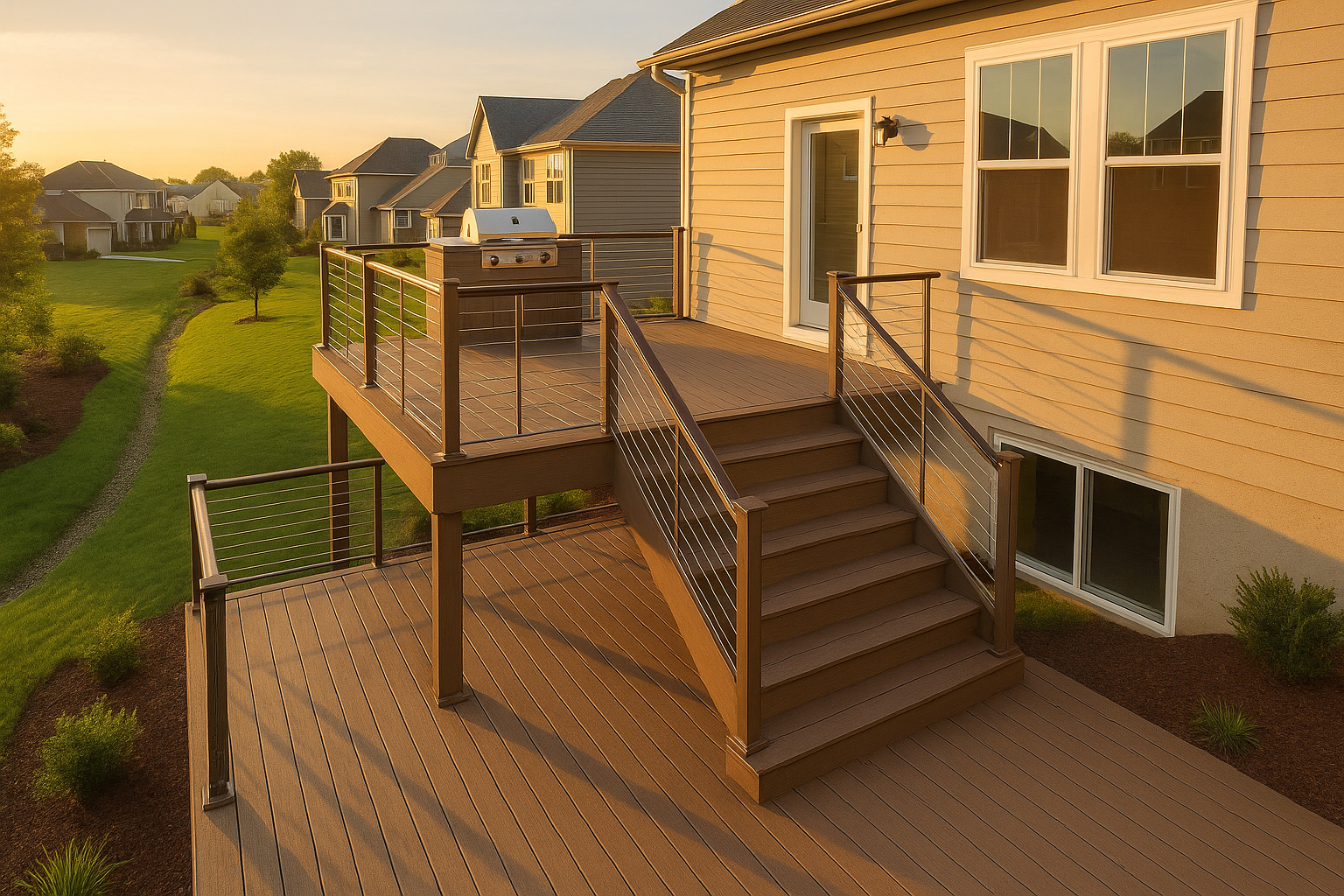
Cable railings are popular in modern homes around Hamilton County, but they need to be tensioned right. Badly tensioned cables look saggy and cheap. We cover that in our post on cable railing tension, and it's worth a read if you're going that route.
If you have a fence nearby — and most Indy lots do — you don't need to match the deck to the fence exactly, but you don't want them to fight. A cedar privacy fence next to a cool gray deck can look disjointed. Pick a deck color that works with both the brick and the fence material. Fence contractors often see this too: the yard is one continuous outdoor room.
And if you have a patio enclosure or a screened porch attached to the deck, the deck color should flow into that space. No one wants a warm brown deck that clashes with a gray patio enclosure roof. Think about the whole backyard, not just one element.
Heat, Fade, and the Indiana Four-Season Reality
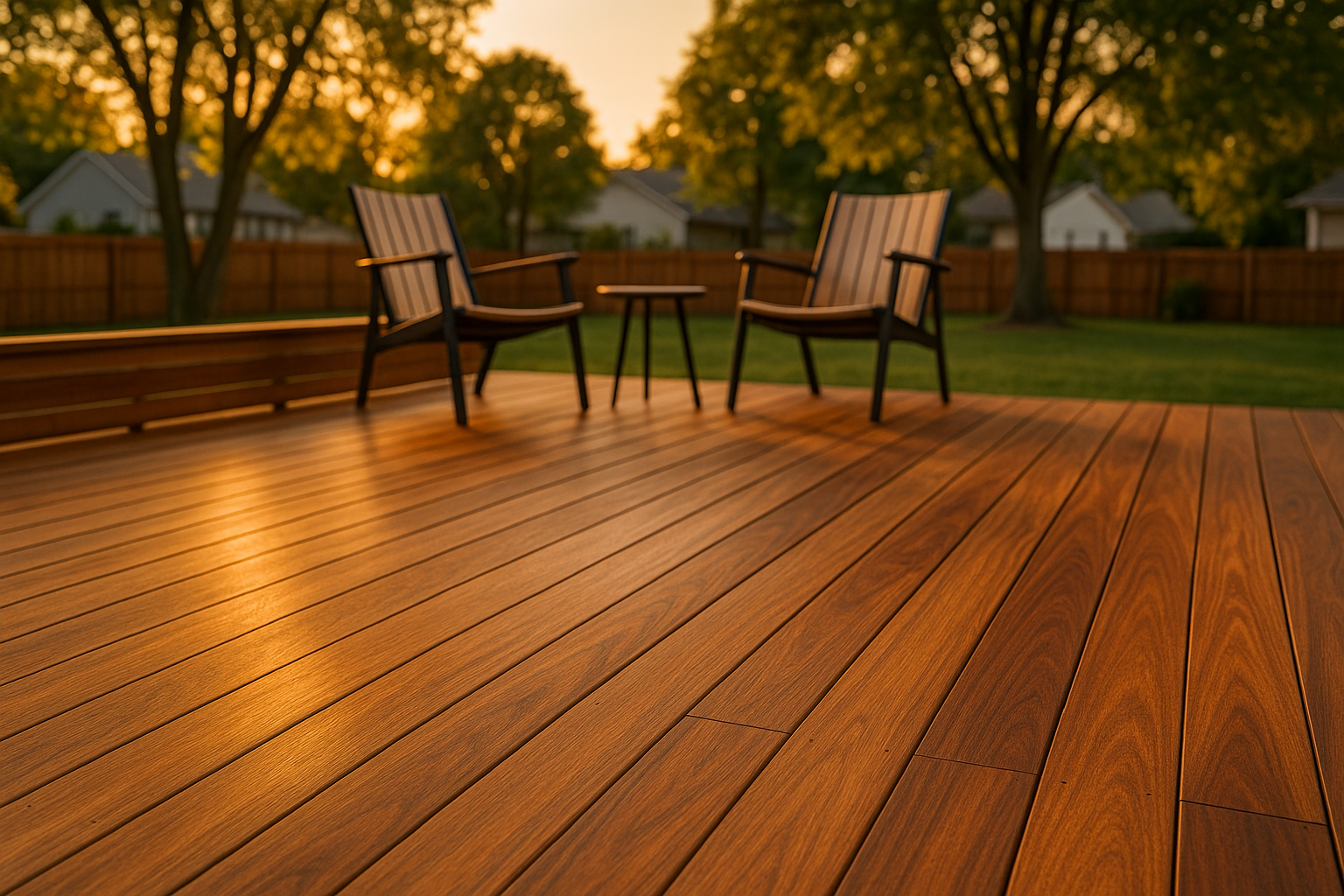
Indiana weather is hard on deck colors. Summer sun is brutal, especially on west-facing decks in Plainfield and Brownsburg. Dark boards can reach 140°F or more on an August afternoon. Lighter and mid-tone boards stay much cooler. But lighter boards show every speck of dirt, pollen, and leaf tannin. That's why I like matte, wire-brushed, or variegated finishes. They have texture that breaks up the surface, so a few leaves or some spring pollen don't scream at you.
Composite boards from reputable brands have UV inhibitors in the cap stock, so they don't fade like cheap plastic. But "fade resistant" doesn't mean "fade proof." Over 10 to 15 years, even good boards lighten a shade or two. Midwest sun and snow glare aren't kind to high-gloss finishes either. Pick a low-gloss or matte board. It looks more natural next to brick and hides minor scratches.
If you're worried about fading, ask for a sample with a fade warranty and keep a spare board from the install. Down the road, you can swap a damaged board and any color difference won't be as obvious.
HOA Approvals, Lead Times, and Getting Samples in Real Indy Light
Most of the HOAs I deal with in Hamilton and Boone counties have a color approval process for decks. They usually want the manufacturer's color name and a photo of the sample next to your brick. That's not a big deal if you submit early. But if you wait until the week before the build, you might get stuck.
Popular composite colors go out of stock. Trend colors like certain warm greiges and dark walnuts can have 6- to 10-week lead times right now. We wrote about this in our post on deck material lead times, because it caught a lot of homeowners off guard last summer. Pick your color early, lock it in, and avoid a schedule slip.
And here's the thing about samples. Those tiny 2-inch chips from the display board are nearly useless. You need a full-size board, or at least a 12-inch piece, set against your actual brick and mortar, at different times of day. Morning light in Fishers is different from golden hour in Zionsville. Hold the sample vertically, not flat on the ground. Look at it wet and dry. Walk across the street and see if it looks right from the curb. The color that looks perfect on a website can look completely different next to your brick in person.
At DeckPros, we bring full-size composite samples to your house during the quote. No cost, no pressure. We'll stand there with you in the afternoon sun and move boards around until it clicks. Then we give you a clear, itemized proposal with the exact color, railing, and border combination you picked. If you're in Indianapolis, Carmel, Fishers, Westfield, Zionsville, Noblesville, Greenwood, Brownsburg, Avon, or Plainfield, you can schedule that consult right here.
Thinking about your own deck or pergola?
Free in-home design consultation, 3D rendering, and a written quote — no pressure.